
English| EUR
Suggested for you
More currencies
Choose a language
Taking children on a desert camel trek requires understanding age thresholds, saddle configurations, and handler supervision. Most operators in the Dubai Desert Conservation Reserve set a minimum age between four and six years, depending on the child's size and comfort level. This guide walks you through eligibility, safety protocols, and how to book a family-friendly safari that includes camel riding.
Quick answer
Children aged four and older can typically ride camels in the Dubai Desert when accompanied by an adult handler, though some operators raise the minimum to six years. Younger children often share a saddle with a parent in a double-seat configuration, secured by safety harnesses and led by trained guides. The camel ride dubai kids experience is embedded in guided safari packages starting at 695 AED, which include short treks during cooler morning or late-afternoon windows to avoid midday heat stress.
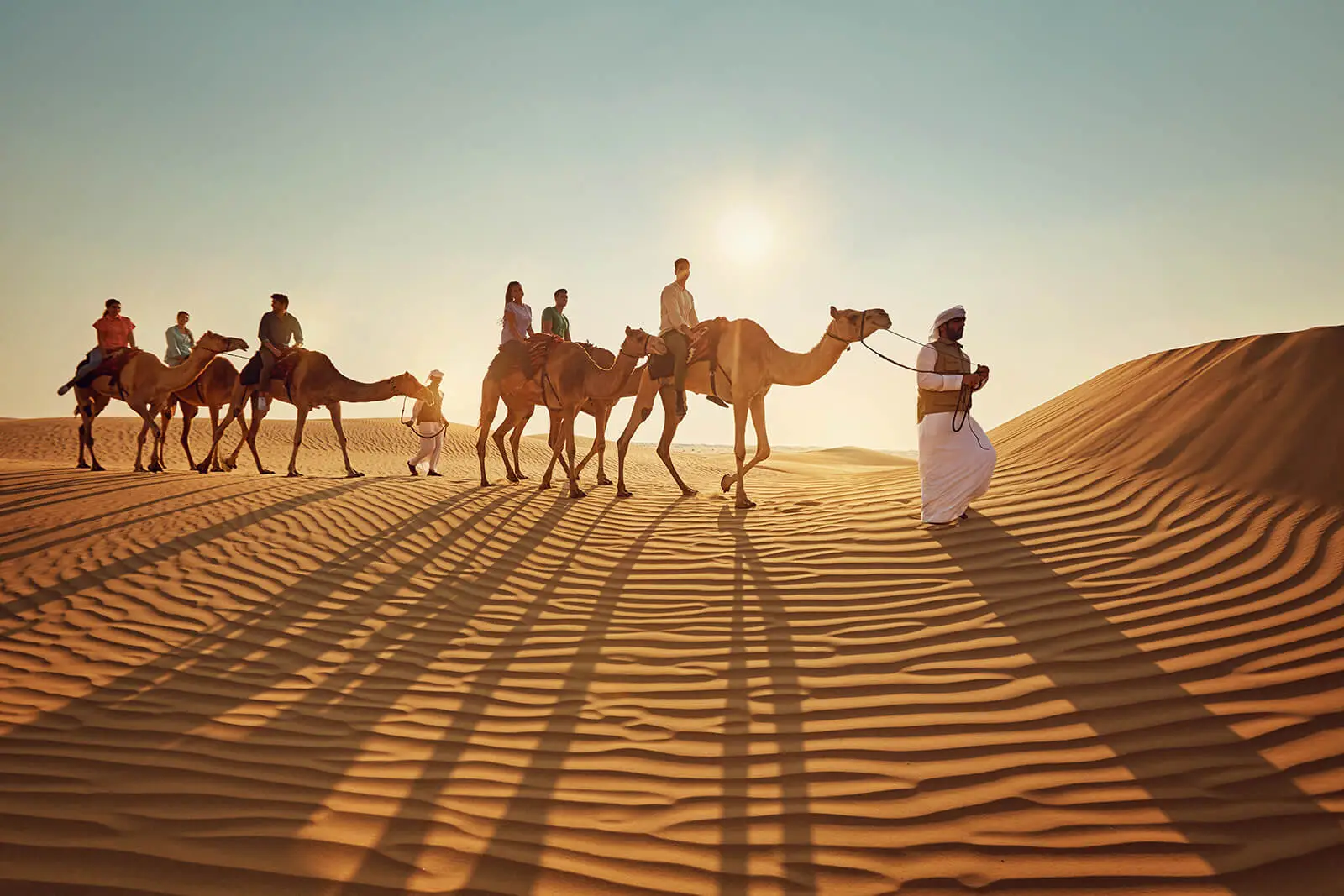
A child's first encounter with a dromedary camel—standing two meters tall at the shoulder—often oscillates between awe and apprehension, which is why handlers in the Dubai Desert Conservation Reserve spend several minutes introducing young riders to the animal before mounting begins. The reserve enforces strict safety protocols: children under eight must ride in tandem with an adult in a reinforced double saddle, while older kids who meet height and confidence thresholds may ride solo under continuous guide supervision. Camel treks for families span fifteen to thirty minutes, timed to coincide with the morning arrival window starting at 06:30 or the late-afternoon slot before sunset. Midday rides are discouraged for children due to heat exposure and camel temperament—dromedaries become less cooperative as temperatures climb past 38°C. The reserve's minimum package fee of 695 AED covers the guided safari experience, which bundles the camel ride with wildlife spotting, dune walks, and return transport, ensuring families do not navigate logistics separately. Parents booking a camel ride dubai kids outing should confirm the operator's age policy and saddle type during reservation. Single-hump saddles sit lower and wider than racing configurations, reducing lateral sway that unsettles young riders. Handlers tie the camel in a kneeling line during mounting, eliminating the abrupt upward lurch that frightens first-timers. The animal rises hindquarters-first, then front, creating a forward tilt that children find easier to anticipate when forewarned. Practical preparation matters: closed-toe shoes prevent sand burns, long sleeves shield from sun reflection off dune surfaces, and a water bottle per child counters dehydration during the trek. Photography opportunities cluster at the halfway turnaround point, where guides pause the caravan against ridgeline backdrops. The experience concludes with a supervised dismount, again performed while the camel kneels, giving children a controlled exit rather than a drop from height.
“Handlers tie the camel in a kneeling line during mounting, eliminating the abrupt upward lurch that frightens first-timers.”
The best arrival window for a camel ride with kids is between 06:30 and 17:00. This timeframe balances comfortable desert temperatures with high-quality natural light for photography and wildlife viewing.
Cooler temperatures; 20°C to 28°C
This period offers the most comfortable experience for children and active wildlife. It is the preferred time for clear photos without harsh shadows.
Extreme heat; exceeds 40°C
High temperatures make mid-day visits unsuitable for children. Direct sun can cause rapid fatigue and poor light for photography.
Declining heat; 30°C to 35°C
As the sun lowers, temperatures become manageable for desert activities. The golden hour lighting is ideal for landscape photography.
Verdict: For the most comfortable conditions, aim for an arrival between 06:30 and 17:00 during the cooler months of November to March.
The Dubai Desert Conservation Reserve is open daily for camel ride experiences. Operations run continuously throughout the week to accommodate visitor schedules.
The Dubai Desert Conservation Reserve provides a controlled environment for families to experience local wildlife and traditions. Practical planning ensures children remain comfortable and safe during desert excursions.
Desert terrain consists of deep sand which is not compatible with standard strollers. Opt for a baby carrier to ensure mobility across dunes and sandy areas.
Camel riding is generally suitable for children aged five and older who can sit independently. Confirm specific safety requirements with your guide prior to arrival.
Restroom facilities are limited once you enter the conservation area. Use the main visitor amenities before departing for the desert interior.
Bring binoculars for spotting Arabian oryx and gazelles in the reserve. The camel ride pace is slow, allowing children to observe desert flora and fauna safely.
The Dubai Desert Conservation Reserve is located along the E66 Dubai-Al Ain Road. Private vehicle or pre-arranged tour transport is the standard approach for reaching the desert site.
E66 Dubai-Al Ain Road
E66 Dubai-Al Ain Road
As there is no public self-drive entry, visitors should coordinate their transfer or tour pickup to arrive at the designated reserve access point. Contact +971 4 303 4888 or visit https://www.ddcr.org for specific entry logistics.
Pack light but strategically to keep young riders comfortable and protected during early-morning or late-afternoon desert sessions.
Everything you need to know about camel ride dubai kids
Safety is a primary focus within the reserve, though children must be accompanied by an adult at all times during the activity. Participants should be able to sit upright and hold onto the saddle independently to ensure a secure experience.
Each operator sets specific safety requirements, so checking with your chosen guided safari provider is recommended. Generally, toddlers may need to sit with a parent, depending on the operator's safety policies for the desert landscape.
Entry fees for guided safari packages start at 695 AED. This package typically includes the desert excursion rather than a standalone ride, as public self-drive entry is not permitted.
Bringing essentials such as sunscreen, sunglasses, and a wide-brimmed hat will help protect against the sun. Comfortable, modest clothing and closed-toe footwear are also advisable for navigating the sandy dunes.
The reserve remains accessible seven days a week, with operating hours from 00:00 to 23:59. While the site is open, guided tours coordinate schedules to avoid the peak heat of the day.
The best arrival window is between 06:30 and 17:00 to avoid midday heat and capture optimal lighting for wildlife and photography. Planning your arrival within this period ensures a comfortable experience in the Dubai Desert Conservation Reserve.