English| EUR
Suggested for you
More currencies
Choose a language
Desert temperatures in Dubai swing between 15°C winter mornings and 45°C summer afternoons, and camel saddles sit higher than most visitors expect. The right clothing protects you from sun exposure, sand abrasion, and the physical demands of mounted desert travel while keeping you comfortable across temperature shifts that can exceed 20 degrees between dawn and midday.
Quick answer
Lightweight, loose-fitting long trousers and long-sleeved shirts in breathable fabrics form the foundation for camel ride dubai what to wear. Closed-toe shoes with grip, a wide-brimmed hat, and sunglasses protect against sand and sun. Avoid shorts, open sandals, and synthetic materials that trap heat. Layer a light jacket for early-morning rides when temperatures drop, and bring a scarf to cover your face during windier sections of the trek.
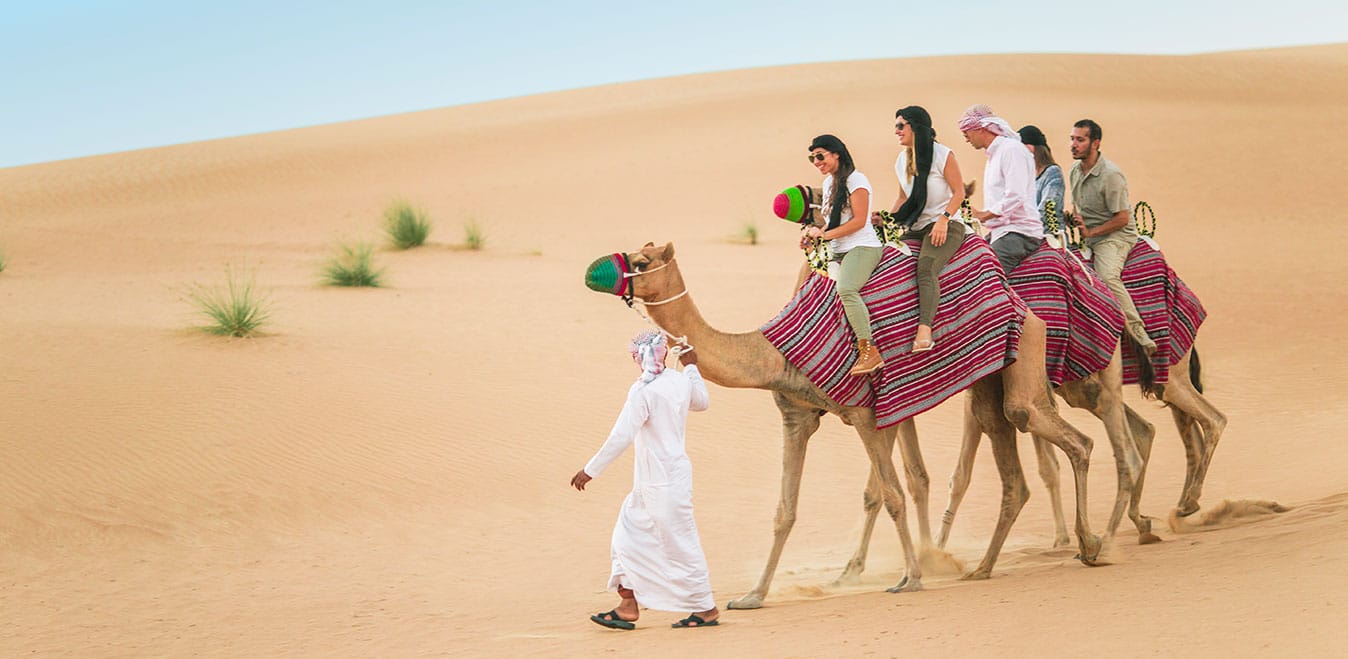
Camel saddles sit roughly two meters above the sand, and the rocking motion during a trek generates friction along your inner thighs and lower legs that exposed skin cannot withstand for more than fifteen minutes. Long cotton or linen trousers create a barrier between your skin and the leather saddle while allowing air circulation in temperatures that regularly exceed 40°C between May and September. Denim traps heat and restricts movement when mounting and dismounting, making it the least practical choice despite its durability. The Dubai Desert Conservation Reserve spans 225 square kilometers of open dune landscape with minimal shade cover, and UV exposure at ground level intensifies as sunlight reflects off pale sand. A long-sleeved shirt in a light color reduces direct skin contact with solar radiation while a wide-brimmed hat shades your face and neck during the 30 to 90 minutes most camel treks last. Sunglasses rated for UV400 protection prevent sand glare from causing eye strain, and a lightweight cotton scarf serves double duty as face protection when desert winds pick up and as an additional head covering during midday sun. Footwear determines your stability when mounting a kneeling camel and your safety if you need to walk sections of the route. Closed-toe shoes with rubber soles grip the stirrups and protect your feet from hot sand that can reach 70°C in summer months. Sneakers or hiking sandals with back straps work well, while flip-flops and open sandals expose your feet to sand burns and offer no ankle support. Most operators provide guidance on appropriate desert clothing for camel riding, but layering remains essential since early-morning departures between 06:00 and 09:00 start in temperatures 15 to 20 degrees cooler than midday peaks. Synthetic athletic wear designed for gym use retains body heat and creates discomfort during desert activities, while natural fibers like cotton and linen wick moisture and dry quickly in low-humidity conditions. A light windbreaker or fleece jacket stored in a small backpack handles the temperature drop during winter rides, when pre-dawn conditions can fall to 12°C before the sun rises above the dune line.
“Long cotton or linen trousers create a barrier between your skin and the leather saddle while allowing air circulation in temperatures that regularly exceed 40°C between May and September.”
Dressing appropriately for a desert camel ride respects local customs while keeping you comfortable in high heat and direct sun. Choose modest, breathable layers that cover shoulders and knees.
Sand, sun, and a seated ride demand a focused gear list beyond what you wear.
The best arrival window is 06:00–09:00, as early morning provides the coolest temperatures and optimal light for desert activities. Seasonal planning is essential, as the Dubai Desert experiences extreme heat fluctuations that dictate your choice of fabrics and layering.
Mild days, cool nights (15°C–25°C)
Winter offers the most comfortable conditions for extended desert excursions. Layering is recommended for temperature drops after sunset.
Warm to hot (28°C–38°C)
These shoulder months require lightweight, breathable fabrics. Early morning rides are necessary to avoid midday heat.
Extreme heat (35°C–45°C+)
High temperatures make desert activities physically demanding. Camel rides should be limited to the earliest hours of the day.
Verdict: The best slot is weekday mornings between 06:00–09:00 during the cooler months of November to February.
The Dubai Desert Conservation Reserve is open daily to accommodate visitors for desert activities such as camel rides. The reserve remains accessible throughout the week to provide flexible scheduling for your desert visit.
Admission to the Dubai Desert Conservation Reserve is free for all visitors. Camel rides are not included with entry and must be arranged separately through licensed desert safari operators.
Verdict: While reserve entry is 0 AED, the cost of a camel ride depends on the specific tour operator and package selected.
Everything you need to know about camel ride dubai what to wear
When considering camel ride dubai what to wear, prioritize lightweight, breathable fabrics that cover your shoulders and knees to ensure comfort. Loose-fitting clothing is generally recommended to help you stay cool during your experience in the Dubai Desert Conservation Reserve. Local customs emphasize modest dress, so keeping your attire conservative is respectful and practical. Planning your camel ride dubai what to wear requires balancing comfort with cultural considerations, especially since the desert environment can be quite harsh. In the cooler winter months, a light jacket or pashmina is a smart addition to your camel ride dubai what to wear as temperatures drop significantly after sunset. Closed-toe shoes are essential for navigating the sandy dunes and protecting your feet when you mount or dismount your camel. Beyond your outfit, consider bringing sunglasses, a wide-brimmed hat, and high-SPF sunscreen to protect against the intense sun exposure. Children should wear similar modest, comfortable clothing to adults, ensuring they are fully covered to prevent sunburn and irritation from the saddle during the desert safari.